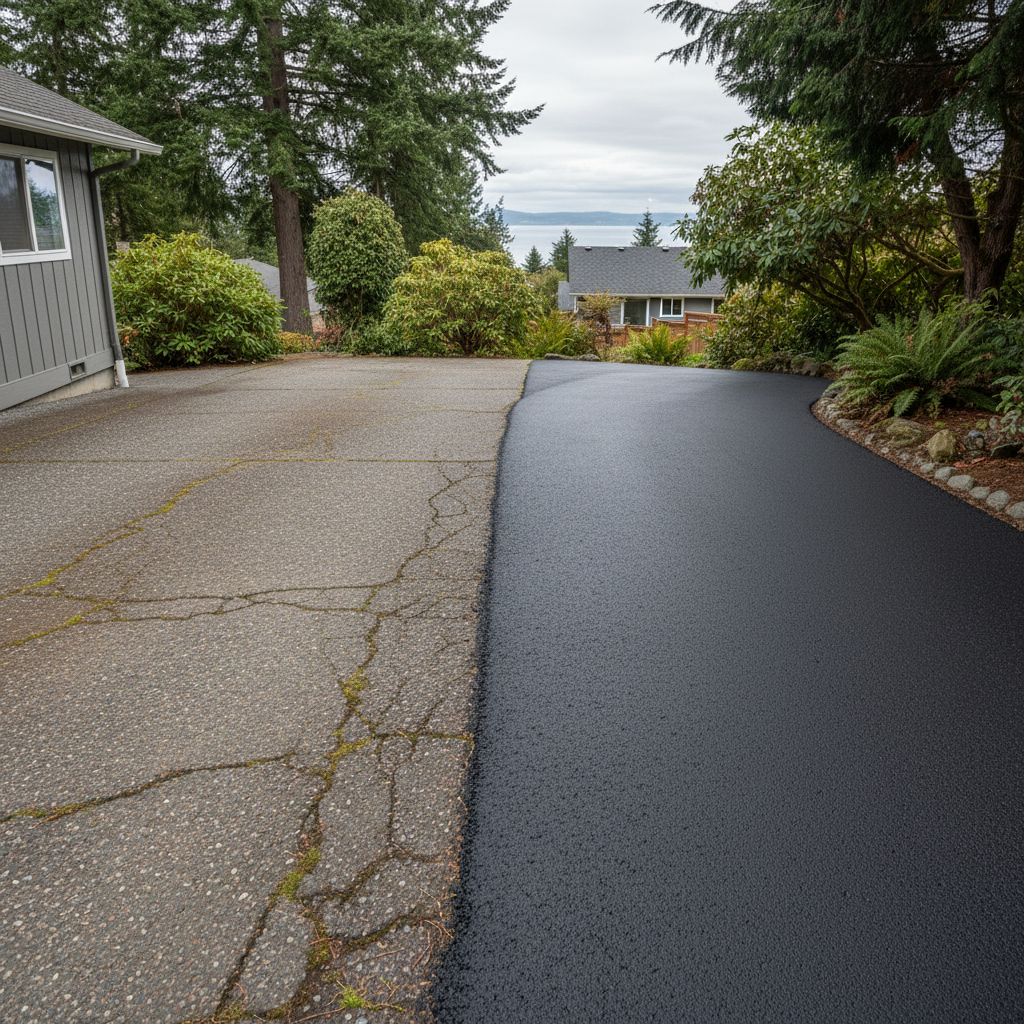
Got a commercial-grade asphalt surface that's seen better days? Maybe it’s a long private drive, a shared access road, or even a small parking area for your home business. You're probably weighing two big options: a fresh overlay or tearing it all out for a full replacement. It's a common dilemma, and I see folks wrestle with it all the time around Shoreline. Let's break down which one makes the most sense for your property, especially with our unique Washington weather.
Understanding the Basics: Overlay vs. Full-Depth
First, let's get clear on what we're talking about. An asphalt overlay is basically putting a new layer of asphalt right on top of your existing, but still structurally sound, pavement. Think of it like a fresh coat of paint, but much thicker and more durable. We'll clean the surface, maybe fix some major cracks or potholes first, and then lay down 1.5 to 2 inches of new hot mix.
Full-depth replacement, on the other hand, is exactly what it sounds like. We rip out all the old asphalt, sometimes even dig down into the sub-base if it's compromised, and then build the whole thing back up from scratch. This usually means new gravel, new asphalt layers, and a completely fresh start.
Cost: The Big Decider for Most
Let's be honest, cost is usually the first thing people ask about. And here's the deal: an overlay is almost always going to be significantly cheaper upfront. You're using less material, and the labor involved is less intensive because we're not doing all that demolition and hauling away debris. For a typical Shoreline property, you could be looking at half the cost, sometimes even less, compared to a full replacement.
However, and this is a big however, that lower upfront cost only makes sense if an overlay is truly the right solution for your pavement's condition. If you try to put an overlay on a surface that's already failing underneath, you're just putting lipstick on a pig. Those underlying problems will eventually telegraph through the new layer, and you'll be back to square one, having wasted money.
Durability and Lifespan: What Can You Expect?
A properly done asphalt overlay can give you another 8-15 years of good service. It really depends on the quality of the existing base, the traffic load, and how well you maintain it. If the existing asphalt is mostly just showing surface cracks, fading, or minor rutting, an overlay can extend its life considerably.
A full-depth replacement? That's your long-term solution. When we do a full replacement, we're building a brand new pavement designed to last 20-30 years, sometimes even longer, especially if it's well-maintained. We get to address any drainage issues, compact the sub-base properly, and ensure everything is built to spec from the ground up. This is particularly important around here, where our clay-rich soils can cause issues if not properly managed during construction.
Maintenance: Keeping it Looking Good
Both options benefit from good maintenance, but their needs differ a bit. With an overlay, you'll still need to keep an eye on cracks that might develop, especially if the underlying pavement continues to move. Sealcoating every 2-3 years is still a great idea to protect that new surface from UV rays and water intrusion.
For a full replacement, the maintenance routine is pretty standard: regular sealcoating, prompt crack filling, and keeping it clean. Because the base is brand new, you're less likely to see widespread issues popping up from underneath, meaning your maintenance efforts are more about preservation than reaction.
Appearance: First Impressions Matter
An overlay will immediately make your pavement look brand new. It's smooth, dark, and fresh. It dramatically improves curb appeal. The only thing you might notice is a slight increase in elevation, as you've added a new layer on top.
A full replacement also gives you that pristine, brand-new look. Plus, it gives you the opportunity to completely redesign the layout if you want, or fix any awkward grades. There's no elevation change to worry about, as the old material is gone.
When to Choose Which for Your Shoreline Property
So, how do you decide?
- Choose an Overlay if: Your existing asphalt has a solid, stable base. You're seeing mostly surface cracking (like alligator cracking that hasn't gone too deep), minor raveling, or just a faded, worn look. You need a cost-effective solution to extend the life of your pavement for another decade or so. The drainage is already good, and there are no significant structural failures or widespread potholes.
- Choose Full-Depth Replacement if: Your asphalt has major structural problems. We're talking widespread potholes, deep and wide cracks, significant rutting, or areas that are constantly sinking. If the sub-base is compromised, or you've got standing water issues that indicate poor drainage, an overlay won't fix it. You're looking for the longest-lasting solution and want to invest in a pavement that will stand the test of time, even with our wet Shoreline winters.
Ultimately, the best way to figure out what's right for your property is to have a professional take a look. We'll come out, assess the condition of your existing asphalt, and give you an honest recommendation. Paradise Asphalt Solutions has been doing this for years, and we've seen every kind of pavement problem you can imagine. Don't guess; get an expert opinion. It'll save you money and headaches in the long run.