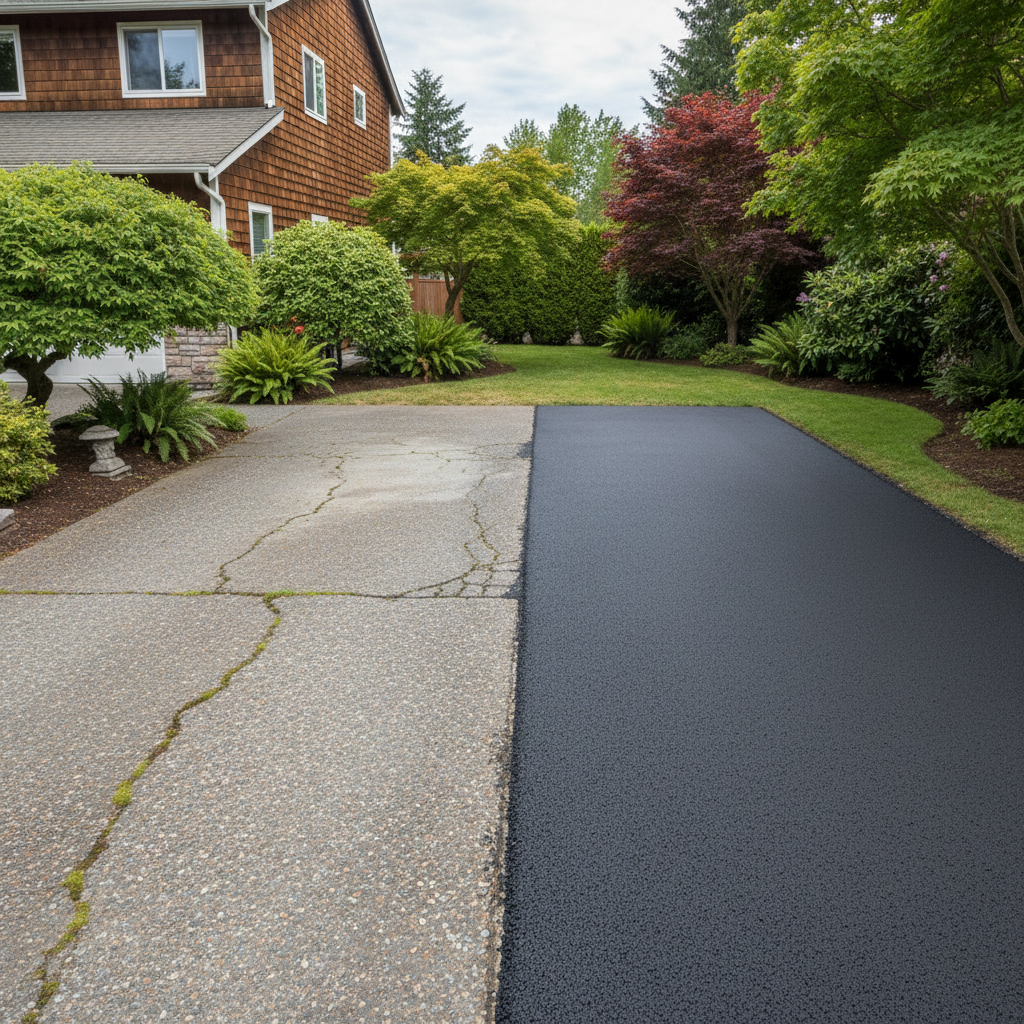
Alright, let's talk driveways. You're looking at putting in a new one or replacing an old, cracked mess, and you've probably heard the two main options: asphalt or concrete. It's a common question I get from folks all over Shoreline, from the hillside homes near Richmond Beach to the flatter lots closer to Aurora. Which one's better? Well, it's not a simple 'this one wins' answer. It really depends on what you're after.
Cost: Upfront vs. Long-Term
Let's get right to it – money. Everyone wants to know about cost. Generally speaking, asphalt is almost always cheaper upfront. You're looking at a lower initial investment to get that new, smooth blacktop down. That's because the materials are less expensive, and the installation process can be a bit quicker.
Concrete, on the other hand, is usually more expensive to install. The materials cost more, and it takes more time and specialized labor to pour and finish correctly. You're paying for that extra durability and often, that cleaner, brighter look right from the start.
Now, when we talk long-term, it gets a little fuzzier. A well-maintained asphalt driveway can last a good 20-30 years, maybe even longer if you're diligent with sealing. Concrete can easily hit 30-40 years, sometimes even 50, with minimal fuss. So, while concrete costs more upfront, its longevity might balance out the cost over the decades. It's like buying a good tool – sometimes paying more initially saves you headaches and replacement costs down the line.
Durability & Our Wet Shoreline Weather
This is where things get interesting, especially here in the Pacific Northwest. Our weather, with its constant rain, freeze-thaw cycles (even if they're not as extreme as other places, we still get them), and general dampness, plays a big role.
Asphalt is flexible. It's designed to expand and contract with temperature changes, which is great for preventing cracks from our occasional cold snaps or shifting soils. It's also pretty good at handling heavy loads without cracking, like your RV or that boat you've got parked. However, asphalt is susceptible to damage from gasoline or oil spills, which can soften and degrade the material over time. It also needs regular sealing to protect it from water penetration and UV rays, which can dry it out and make it brittle.
Concrete is super strong and rigid. It can handle heavy loads and doesn't get soft in the summer heat like asphalt can. It's also pretty impervious to most chemical spills you'd see in a driveway. The downside? That rigidity makes it prone to cracking if the ground underneath shifts too much, or if it's not installed properly with expansion joints. And let's be honest, we've got plenty of clay soils around Shoreline that love to shift. Once concrete cracks, it's a much bigger headache to repair than asphalt. You're often looking at cutting out sections and re-pouring, which is costly and can leave noticeable patches.
Maintenance: What You'll Be Doing
Nobody wants a high-maintenance driveway, right? But both options need some love.
Asphalt definitely requires more regular maintenance. You should plan on sealing it every 2-5 years. This isn't just for looks; it protects the surface from water, sun, and chemicals, extending its life. Small cracks can be filled relatively easily, and potholes can be patched. It's ongoing work, but it's usually DIY-friendly or affordable to have a pro like Paradise Asphalt Solutions handle it for you.
Concrete, while initially less maintenance, isn't zero maintenance. You'll want to clean it periodically to prevent moss and mildew growth, which is a real problem in our damp climate. Sealing concrete isn't as frequent as asphalt, maybe every 3-5 years, but it helps protect against stains and moisture. The big thing with concrete is that when it *does* need repair, it's usually a more involved and expensive job.
Appearance: What Look Are You Going For?
This is purely aesthetic, but it matters to most homeowners.
Asphalt gives you that classic, dark, uniform look. It's sleek and generally blends in well with most home styles. When it's freshly sealed, it looks fantastic. Over time, it can fade to a lighter grey, and patches might be visible if repairs are done. You can't really change its color, though.
Concrete offers more versatility. It's naturally light-colored, which can brighten up your property and reflect heat (a minor bonus, but still). You can get it stamped, stained, or even colored to match your home's exterior. This can really boost your curb appeal and give your home a unique touch. However, concrete can stain more easily than asphalt, and those stains can be tough to get out.
My Recommendation for Shoreline Homeowners
Given our specific conditions here in Shoreline – the frequent rain, the occasional frost, and the common soil types – here's my honest take:
- If your budget is tighter upfront, and you don't mind a bit of regular maintenance, asphalt is a fantastic choice. It's resilient to our weather patterns, easy to repair, and provides a great, durable surface for years. Just commit to that sealcoating schedule, and you'll be golden.
- If you're looking for the absolute longest lifespan with less frequent (but more expensive when needed) repairs, and you've got the budget for the higher initial cost, concrete is a solid investment. It offers more design flexibility and can look pristine for decades. Just make sure it's installed by someone who knows what they're doing, paying close attention to proper base preparation and expansion joints to prevent cracking from our shifting soils.
Ultimately, both are good options. It just comes down to your priorities: initial cost versus long-term maintenance, and the look you want for your home. Think about how long you plan to stay in your house, your budget, and how much time you're willing to put into upkeep. If you're still on the fence, give us a call at Paradise Asphalt Solutions. We can swing by, take a look at your specific situation, and give you a quote for both.