What's the difference between crack sealing and crack filling? Aren't they the same thing?
Nope, they're not the same, and honestly, it's a question we hear all the time. Think of it like this: crack sealing is for cracks that are still "alive." These are usually cracks that are moving a bit with temperature changes, or those wider than, say, a quarter-inch. We use a hot, rubbery material that stays flexible. It expands and contracts right along with the asphalt, creating a really strong bond that just won't let water in. Keeping water out? That's absolutely vital for stopping bigger problems down the road.
Crack filling, on the other hand, is generally for smaller, less active cracks – the hairline ones or those we don't expect to shift much. For these, we use a different, less flexible material, often something emulsion-based. Here, the goal is more about just filling the gap to keep water out and make things look a bit better. Now, if you're seeing a lot of those spiderweb cracks, often called 'alligator cracking,' that's a whole different animal. That usually points to a deeper structural issue, not just a surface crack. For that kind of problem, we'd typically look at options like an overlay or even a full-depth patch.
My driveway looks faded and dull. Does sealcoating really help, or is it just cosmetic?
It's definitely more than just cosmetic, though it sure does make your driveway look sharp. Think of sealcoating as sunscreen for your asphalt. Here in Shoreline, we get our fair share of sun, rain, and even some snow and ice. All that weather, plus oil drips and chemicals, slowly breaks down the binders in your asphalt over time. That's why it fades and gets brittle.
When we put down a good quality sealcoat, it creates a protective barrier. It slows down the oxidation from UV rays, pushes water away, and resists chemical spills. This keeps your asphalt flexible and stops those tiny surface cracks from forming, which are often the first step toward bigger headaches. Oh, and it brings back that rich, black color too, which actually helps your asphalt absorb more heat from the sun, making it a bit more pliable in colder months. So yeah, it absolutely helps your asphalt last longer, not just look better.
How long does asphalt repair usually last?
That's a tough one to give a single number for, because it really depends. What kind of repair is it? How good is the existing asphalt? And, frankly, how well do you take care of it afterward? A simple crack seal, done correctly, can easily last 3-5 years, sometimes even longer, especially if you keep up with regular sealcoating. A pothole patch, if it's a full-depth repair where we cut out the damaged section and replace it with new asphalt, can last many years – often as long as the surrounding pavement, assuming the base underneath is solid.
If we're talking about an asphalt overlay, where we put a fresh layer of asphalt over an existing, structurally sound surface, you might get another 8-15 years out of it. But if the underlying base isn't stable, or if you've got a lot of heavy traffic, that lifespan can shrink. The big takeaway? Address problems early. A small crack fixed today prevents a big pothole next year, which definitely saves you money in the long run.
I've got a pothole. Can I just fill it with cold patch from the hardware store?
You can, but it's usually just a temporary fix, at best. Cold patch is great for emergencies, like if you need to make a driveway safe immediately to prevent someone from tripping. It's easy to use, and you can absolutely do it yourself. But it doesn't bond permanently with the surrounding asphalt, and it tends to break down and pop out, especially with our wet Shoreline winters and the freeze-thaw cycles we sometimes get.
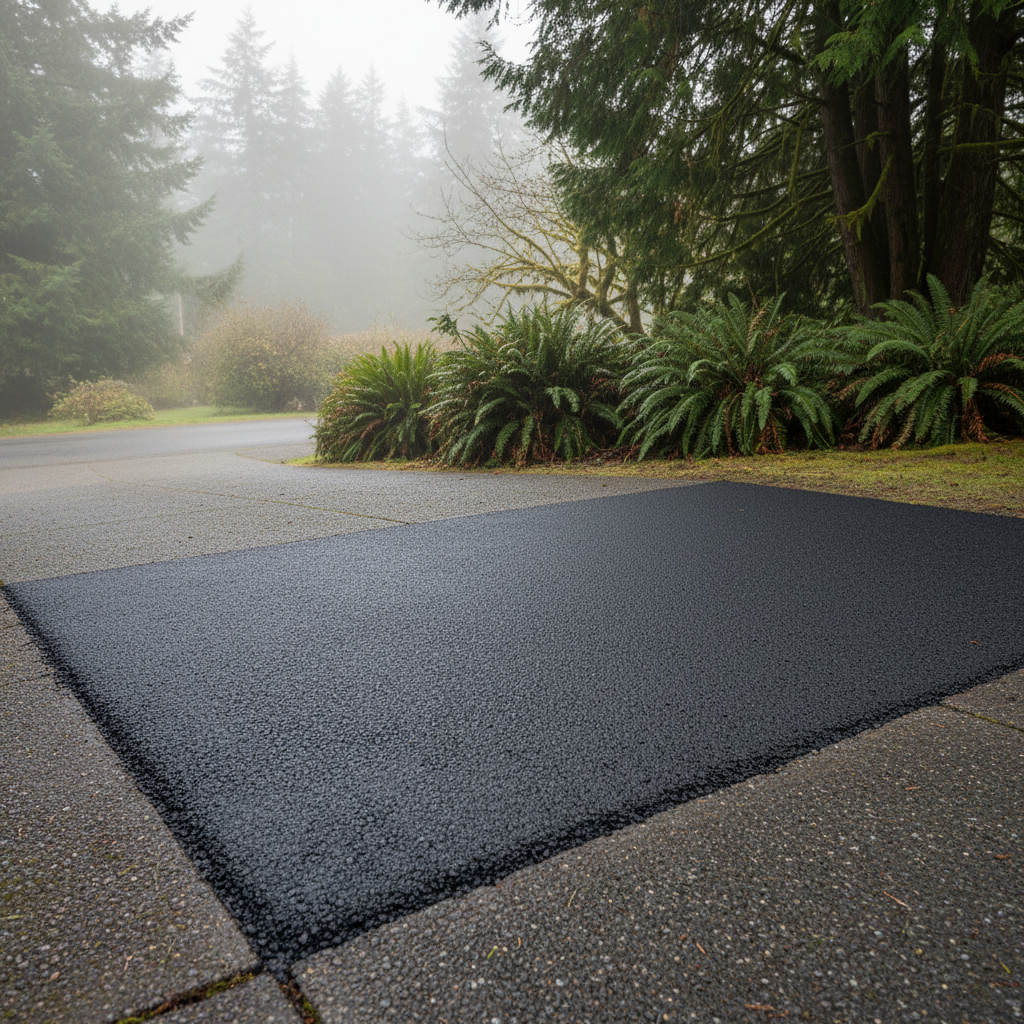
For a lasting repair, you really need a hot mix asphalt patch. We'll cut out a clean, square section around the pothole, making sure we get rid of all the loose, damaged material. Then we compact the base, apply a tack coat for adhesion, and fill it with hot asphalt, compacting it thoroughly. That creates a strong, durable repair that'll hold up for years. Cold patch is like a band-aid; hot patch is surgery.
When is the best time of year to get asphalt repairs done in Shoreline?
Hands down, spring, summer, and early fall are the sweet spots for asphalt work around here. Asphalt needs warm, dry conditions to cure properly and achieve maximum strength and durability. When it's too cold, the asphalt cools too quickly, making it harder to compact properly. When it's too wet, water can get trapped, leading to adhesion issues and premature failure.
We generally aim for temperatures above 50°F and definitely no rain in the forecast for the day of the repair and ideally a day or two after. So, from about April through October, we're usually good to go. Trying to do major repairs in the dead of winter, especially with our clay soils and constant drizzle, is just asking for trouble. We'd much rather wait and do it right for you.
My asphalt is sinking in one spot. What's causing that, and what can be done?
A sinking spot, or what we call 'subsidence,' almost always signals a problem with the sub-base or drainage underneath your asphalt. It's usually not an asphalt problem itself, but rather what's happening below it. Common culprits include:
- Poor compaction during original installation: If the ground wasn't packed down properly before the asphalt was laid, it can settle over time.
- Water erosion: Water getting under the asphalt – maybe from a leaky downspout, a broken pipe, or just poor surface drainage – can wash away the soil or aggregate underneath, creating a void. This is super common in older Shoreline homes where drainage wasn't always a top priority, you know?
- Utility trench settlement: If a utility line was buried under your driveway and the trench wasn't backfilled and compacted correctly, that area can sink.
- Tree roots: Less common for sinking, but roots can certainly heave asphalt up, and sometimes when they die and decompose, a void can form.
To fix it, we first need to figure out the root cause. We'll often cut out the affected asphalt, dig out the area, address any drainage issues, compact the sub-base thoroughly, and then lay down new asphalt. It's a more involved repair than a simple pothole, but it's essential to prevent the problem from spreading or coming back. Sometimes, if it's a very small, isolated dip, we might be able to do a skin patch, but that's pretty rare for true sinking.
Look, maintaining your asphalt isn't rocket science, but it does take a little know-how and the right tools. If you've got questions or are seeing any of these issues on your property, don't hesitate to give us a call at Paradise Asphalt Solutions. We're here to help you keep your driveway in top shape.