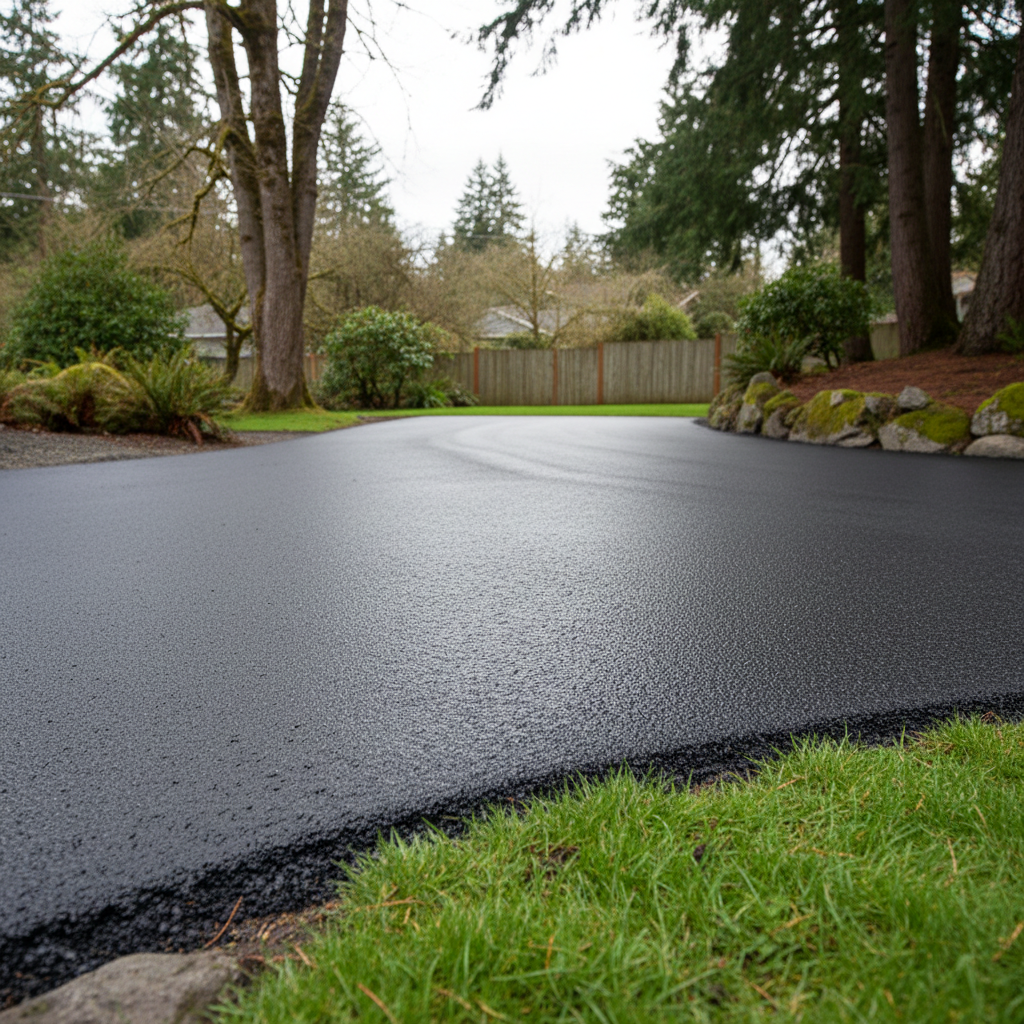
Alright, let's talk asphalt. I get a lot of the same questions from folks around Shoreline, whether they're in Richmond Beach or up by Innis Arden. It makes sense; your driveway's a big part of your home, and you want to make sure it's done right and lasts. So, I figured I'd tackle some of the most common things people ask me about their asphalt.
How long does an asphalt driveway typically last?
This is probably the number one question I get. A well-installed asphalt driveway, properly maintained, should give you a good 15 to 20 years, sometimes even more. But here's the kicker: 'well-installed' and 'properly maintained' are key. If the base isn't prepped right, or if you skip on sealcoating, you're going to cut that lifespan way down. Things like heavy vehicle traffic, drainage issues, and even our wet Shoreline winters with all that rain and freeze-thaw cycles can impact it. A good, solid foundation, usually compacted gravel, is crucial. Without that, even the best asphalt mix won't hold up.
What's the difference between asphalt patching and full replacement?
Think of it like this: patching is for localized problems, while replacement is for widespread failure. If you've got a few potholes, some isolated cracks, or a small section that's sunken a bit, patching is often the way to go. We'll cut out the bad section, prepare the base, and lay new asphalt. It's cost-effective for minor damage. But if your driveway looks like a spiderweb of cracks, has multiple large potholes, significant alligator cracking across a big area, or the whole thing is just crumbling and failing, you're probably looking at a full replacement. Trying to patch a driveway that's past its prime is like putting a band-aid on a broken leg; it just won't hold up, and you'll end up spending more in the long run.
How soon can I drive on my new asphalt driveway?
Patience is a virtue here! Generally, I tell folks to wait at least 2 to 3 days before driving a standard passenger car on a newly paved driveway. For heavier vehicles, like an RV or a moving truck, you really want to give it a full week, maybe even more if it's a hot day. Asphalt needs time to cure and harden properly. Driving on it too soon, especially when it's still soft, can create ruts, tire marks, and even damage the surface. It's tempting to use it right away, but trust me, waiting a few extra days will save you headaches down the road.
Do I really need to sealcoat my asphalt driveway? How often?
Absolutely, you do! Sealcoating is like sunscreen for your driveway. It protects the asphalt from UV rays, water penetration, oil spills, and general wear and tear. It helps keep the asphalt flexible and prevents it from drying out and becoming brittle, which leads to cracking. I recommend sealcoating every 2 to 3 years. Some folks push it to 4, but any longer than that, and you're really leaving your driveway vulnerable. It's a relatively inexpensive maintenance step that significantly extends your driveway's life.
What causes cracks and potholes, and how can I prevent them?
Cracks and potholes are usually a combination of things. Water is a big culprit. When water seeps into tiny cracks and then freezes, it expands, pushing the asphalt apart. Then it thaws, leaving a void, and eventually, traffic breaks down the unsupported asphalt, creating a pothole. Poor drainage, heavy loads, and just the natural aging of the asphalt also contribute. To prevent them, good drainage is critical – make sure water isn't pooling on your driveway. Regular sealcoating helps keep water out. And fixing small cracks quickly before they become big problems is a smart move. Don't let those little hairline cracks turn into major issues.
How does Paradise Asphalt Solutions ensure quality and durability?
Look, for us at Paradise Asphalt Solutions, it all starts with the prep work. We don't cut corners on the base. We make sure it's properly excavated, graded, and compacted. If the base isn't right, nothing else matters. We use high-quality asphalt mixes that are designed for our Pacific Northwest climate. Our crews are experienced and know what they're doing – they're not just slapping down asphalt. We pay attention to details like proper drainage, compaction, and making sure the edges are clean and tight. We stand by our work because we know a good job means a happy customer, and that's how we've built our reputation here in Shoreline.
What should I do if I see standing water on my driveway after it rains?
Standing water, or 'ponding,' is a red flag. It means your driveway isn't draining correctly, and that water is going to accelerate deterioration, especially with our frequent rain here. If it's a new driveway, it could be an installation issue with improper grading. If it's an older driveway, it might be due to settling, cracking, or a clogged drain nearby. You should get it looked at. Sometimes it can be fixed with a minor repair or by improving the surrounding drainage. Other times, it might indicate a bigger problem that needs addressing before it causes major damage to your asphalt and potentially your home's foundation.